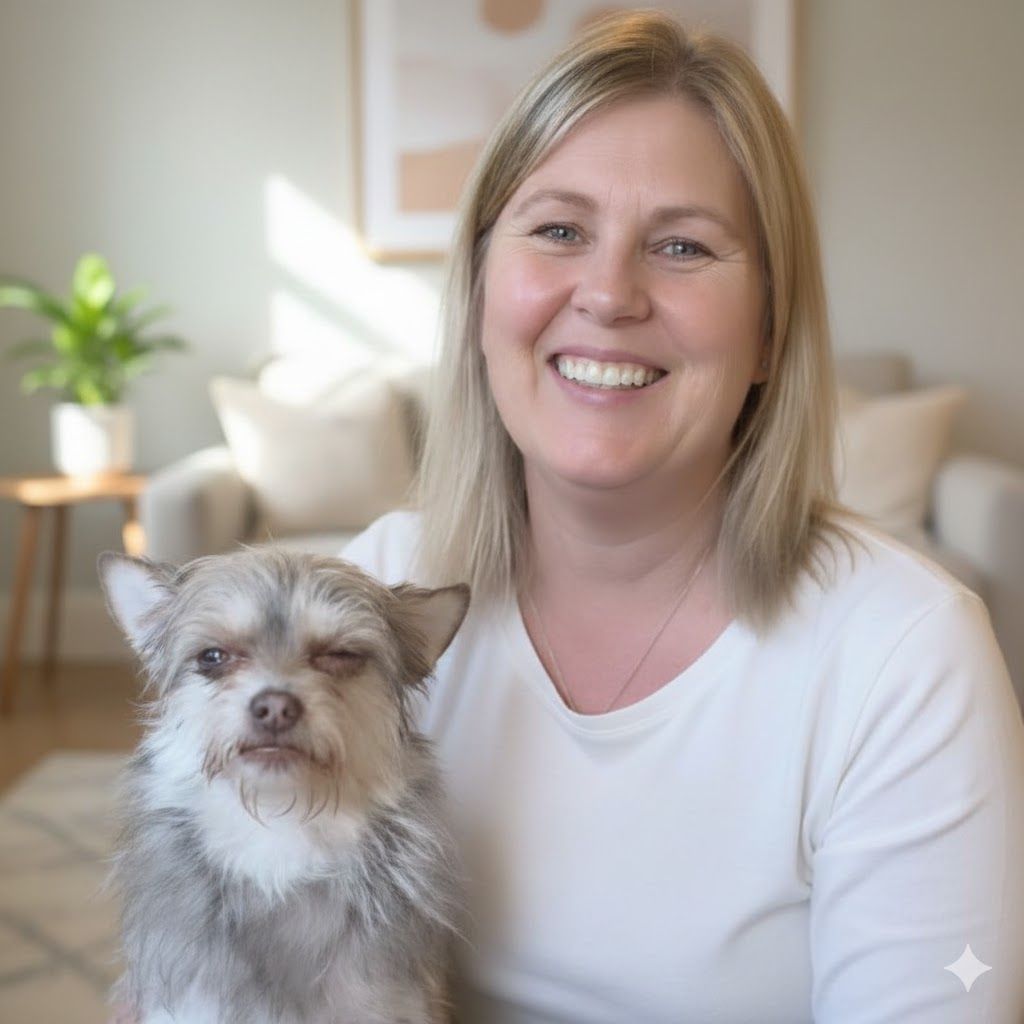
The Fawn Response in Dogs: Why Some Dogs Freeze Into Stillness Instead of Fighting or Fleeing
Most people know the classic fight or flight response. Fewer people know that the fawn response in dogs is just as common, and often far more overlooked.
A dog showing the fawn response does not bark, growl, or run. They go still. They soften their body, lower their head, and appear to comply, even when what they are really doing is trying to survive an interaction they feel powerless to escape.
Understanding the fawn response in dogs matters because it is so easily mistaken for calmness or good behaviour. A dog who freezes, licks their lips, rolls onto their back, or becomes unusually passive during a stressful encounter is not necessarily relaxed. Learn more about your dog's communication in this blog post.
What the Fawn Response Actually Looks Like
- Freezing or going unusually still
- Excessive licking of lips, faces, or hands
- Rolling onto the back with a stiff, tense body rather than a loose, relaxed one
- Avoiding eye contact while remaining physically close
- Tail tucked but body pressed towards the person or dog causing the stress
- A general sense of trying to please or appease rather than genuine engagement
The Nervous System Behind the Fawn Response
To understand why the fawn response in dogs happens, it helps to look at the autonomic nervous system.
Fight and flight are driven by the sympathetic nervous system, the branch responsible for mobilising the body into action.
Freeze and fawn sit closer to the parasympathetic branch, specifically the dorsal vagal pathway, which governs shutdown and immobility when a dog perceives that neither fighting nor fleeing is possible. Learn more about the dog's nervous system in this post.
Fawning is essentially an attempt to de-escalate a threat through appeasement while the body stays braced in a low-level freeze. It often develops in dogs who have learned, through repeated experience, that active resistance does not change the outcome.
This might come from harsh handling, inconsistent guardians, previous trauma, or simply a temperament that defaults to appeasement under pressure.
This is why the fawn response in dogs deserves the same compassion and attention as more obvious fear behaviours. A dog who fawns is not being difficult, stubborn, or overly submissive by nature.
Their nervous system has learned that stillness and appeasement are the safest available strategy, and that pattern can be reshaped with patience, safety, and trauma-informed support.
Supporting a Dog Through the Fawn Response
Recognising the fawn response in dogs is only the first step.
What a dog needs afterwards is a guardian who can slow everything down and offer consistent, predictable safety rather than more pressure to perform or comply.
Pushing a fawning dog to "just relax" or forcing continued interaction tends to confirm the very belief that started the pattern, that stillness and appeasement are the only tools available to them.
A more helpful approach starts with choice. Give the dog space to move away if they want to, rather than holding them in place through a stressful interaction.
Watch for the subtle signs of fawning, the lip licking, the stiff stillness, the reluctance to meet your eyes, and treat them as communication rather than good manners. When those signs appear, pause whatever is happening and let the dog's body settle before continuing.
Building safety over time matters more than any single training session. You can learn more about safety in dog training in this blog post. This might mean working with a trauma-informed professional, slowing down handling routines, or simply becoming more fluent in reading a dog's body language before, during, and after a stressful moment.
Dogs who fawn are not asking to be managed. They are asking to be understood, and given enough consistent safety that their nervous system no longer needs to default to appeasement in order to get through the day.
The fawn response in dogs is not a training problem to correct. It is a nervous system doing its best with the resources it has been given, and it responds best to patience rather than pressure.
If your dog struggles in the World the courses below have been handpicked to cover the topic in this post, get in touch if I can help you in any way, otherwise it would be amazing to see you on a course.
Thanks for reading.